Source to screen
Know why you’re calling.
A profile got your attention. What do you still need to find out? The sourcing and screening desk keeps the evidence, your question and the candidate’s answer together, from longlist review through the first call.
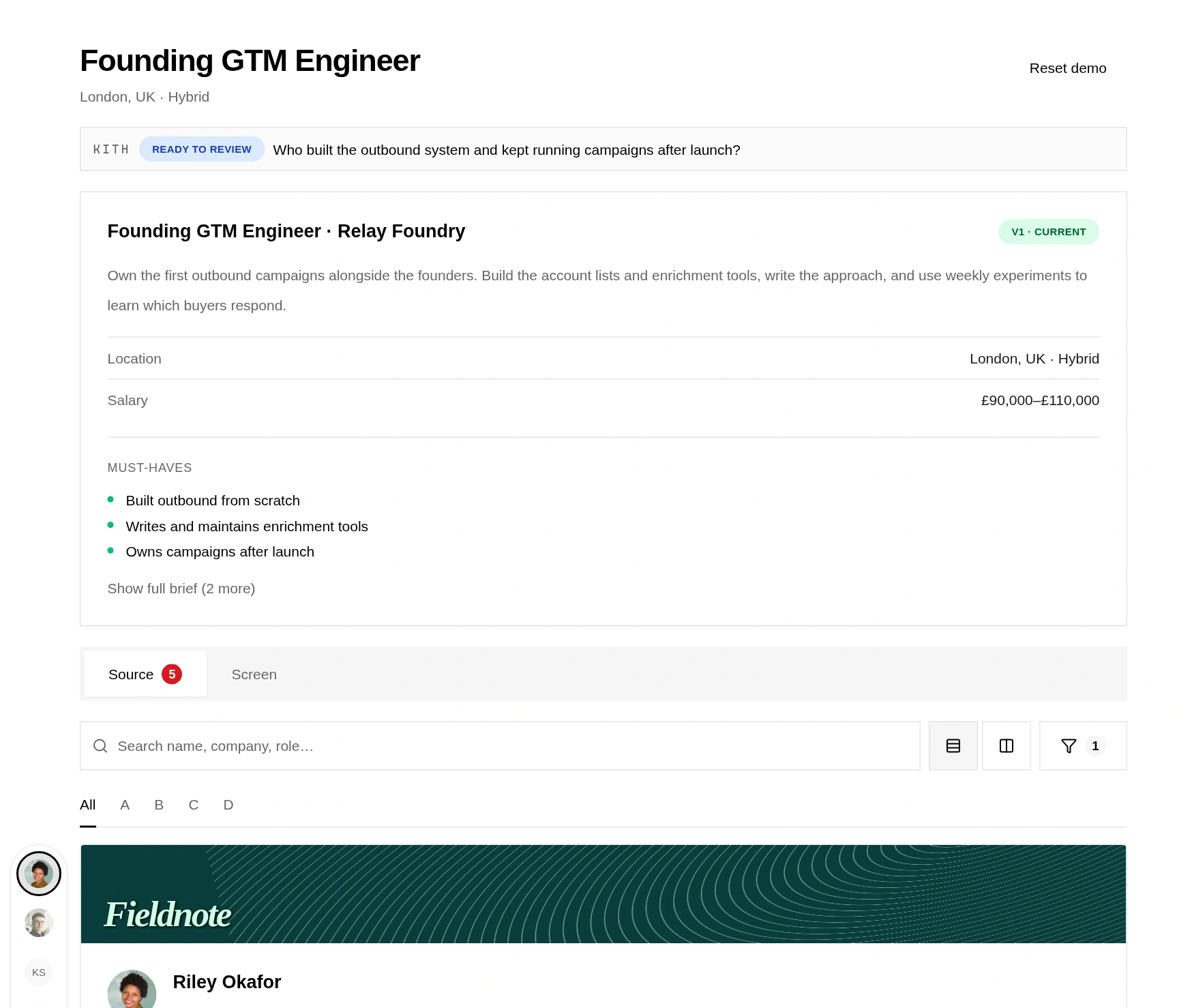
Give the first call a starting point
Riley built the outbound system at Fieldnote. Then a sales hire joined. The launch write-up tells you what Riley shipped, but who actually ran the campaigns?
In Source, leave that question with your decision. Choose Yes and the recruiter opening Screen sees exactly what to ask. The sample transcript gives them an answer they can bring back to the shortlist.
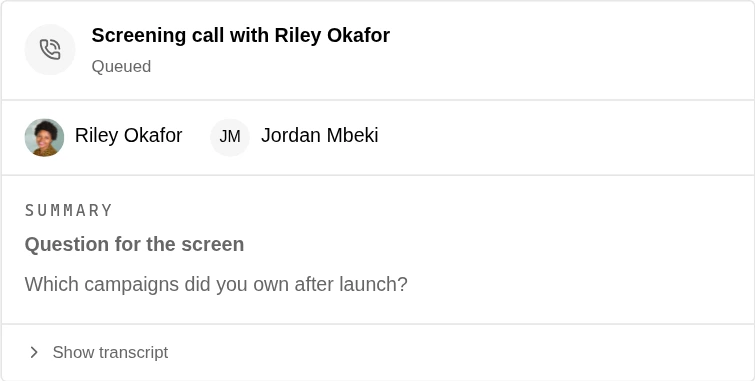
“I ran the first three myself. After the sales hire started, we split research and copy, but I kept the weekly experiment log.”
Try the sample desk
You’re hiring a founding GTM engineer for Relay Foundry. Read the brief, then pick someone from the Source queue, send them to screening, then open their sample transcript. Save what you learned and check their review card again. All six candidates are fictional. Changes stay in this tab.
Build this in Claude or ChatGPT. Copy this prompt into a new chat to start with the sample records.
Where does your handoff break down?
Bring a longlist and the notes your team uses on a first call. In a workflow audit, we’ll trace one candidate through both and map out what your own desk should carry forward.
Built from the longlist review, screening list and call list blocks.